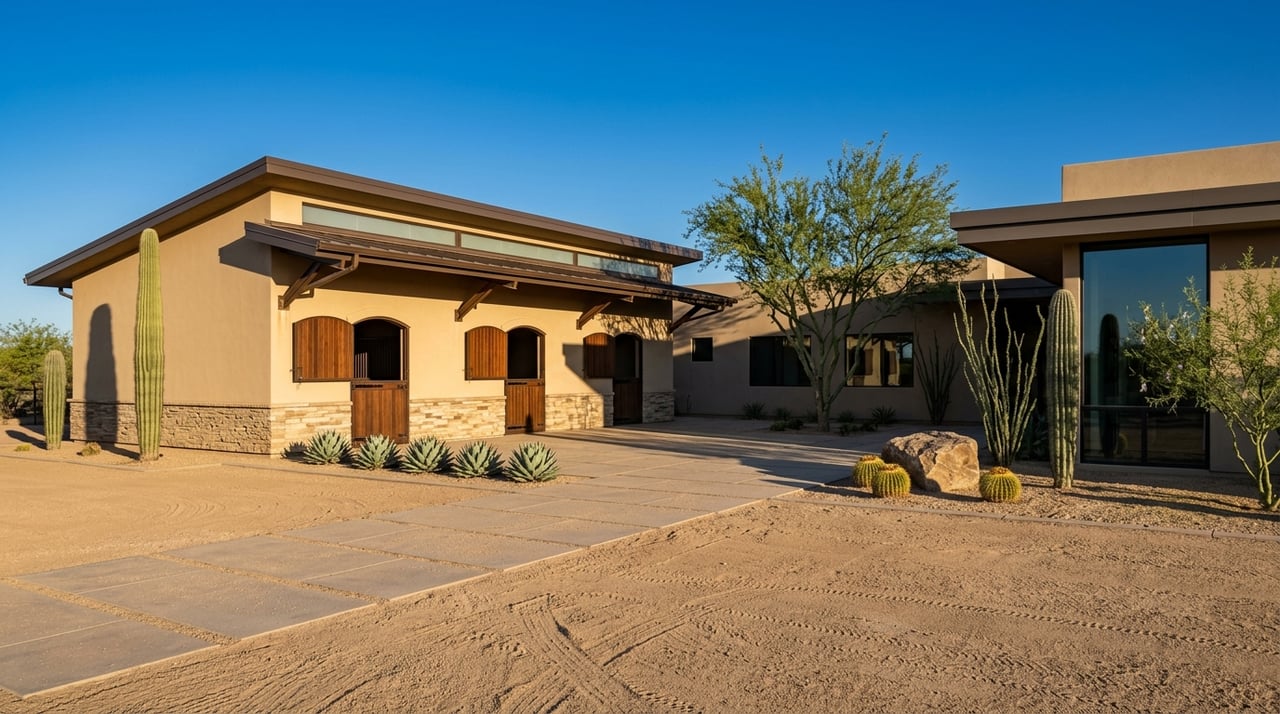
If you picture horse property as nothing more than a big lot on the edge of town, Cave Creek may surprise you. Here, the western lifestyle is woven into the community itself, from open-space zoning and equestrian trails to a town core shaped by ranch history, rodeo culture, and local character. If you are considering a move to Cave Creek, understanding how horse properties and daily life really work can help you buy with more confidence. Let’s dive in.
Why Cave Creek Feels Different
Cave Creek has deep roots as a mining and ranching community dating back to 1870, and the town still leans into that identity today. According to the Town of Cave Creek history page, the community emphasizes western heritage, local shops, galleries, restaurants, and nightlife rather than trying to feel like a typical suburban area.
That distinction matters when you are shopping for property. Cave Creek is not simply a place where a few homes happen to allow horses. The town's buyer notice for prospective property owners explains that a substantial share of the area is open space and that many residential areas are located in Desert Rural zones, where horses and livestock are part of the land-use pattern.
In other words, the western atmosphere is part of everyday life. You may see equestrian facilities, larger parcels, unpaved roads in some areas, and homes that back to open desert instead of a standard subdivision layout.
What Horse Property Means in Cave Creek
If you want a true horse property in Cave Creek, zoning is one of the first things to review. The town's buyer disclosure states that ranching and the possession of horses or other livestock are tied to at least two contiguous acres in a Desert Rural zone.
That two-acre threshold is important because not every large-looking lot automatically qualifies. Cave Creek's residential zoning ordinance lists Desert Rural minimum lot sizes at 190,000, 89,000, 70,000, and 43,000 square feet per lot, which works out to roughly 4.4 acres, 2.0 acres, 1.6 acres, and 1.0 acre. Based on those minimums, the larger DR categories are the most straightforward fit for horse ownership, while smaller lots may need to be combined to meet the two-acre requirement.
Private Ranch vs Commercial Ranch
This is where details matter. Under the zoning ordinance, a private ranch can include uses such as boarding, breeding, equine training, equine lessons, sale of ranch animals, and youth-related activities. However, it does not include dairies, liveries, retail hay, feed or tack sales, or equine activities open to the general public.
A commercial ranch is different and requires at least five contiguous acres. Commercial ranches may host public or club rodeo-type activities, which makes them a separate category from a residential horse setup.
Why the Rural Feel Is Protected
The ordinance also explains why Cave Creek feels so open compared with more built-out parts of the Valley. Desert Rural zoning is intended to reduce conflicts between urban and desert land uses while protecting scenic vistas, natural habitats, hillsides, and washes.
For you as a buyer, that often translates to lower density, bigger views, and a more rugged setting. It can also mean you need to think more carefully about access, services, and land use before you close.
Trail Access Is a Real Lifestyle Benefit
One of Cave Creek's biggest draws is that the equestrian lifestyle extends beyond your own parcel. The town's horseback riding page says the local trail network connects neighborhoods to the Town Core, Spur Cross Ranch Conservation Area, Cave Creek Regional Park, and Desert Foothills Land Trust properties.
That is a meaningful advantage if you want more than just space for a barn and corral. The same town guidance notes that horses have the right-of-way on town trails, and motorized vehicles are prohibited on trails and in washes, reinforcing that equestrian use is part of the area's planning and culture.
Nearby Riding Areas
Maricopa County confirms that equestrians can ride their own horses in both Cave Creek Regional Park and Spur Cross Ranch Conservation Area, using designated trails and shared-use etiquette. Both parks include horse staging areas, which adds convenience for residents who want regular access to maintained riding areas.
Cave Creek Regional Park offers more than 11 miles of trails, with routes ranging from 0.2 to 5.8 miles. Spur Cross Ranch offers over seven miles of trails, including the more difficult Elephant Mountain trail that connects toward Tonto National Forest.
The town also describes Spur Cross Ranch Conservation Area as a 2,154-acre recreation and conservation area with hiking, biking, and horseback riding on eight trails. For buyers who want quick access to desert riding, that is a major part of the appeal.
The Western Lifestyle Goes Beyond the Barn
Cave Creek's appeal is not limited to acreage and trail rides. The western identity is visible in the town core, local events, and public spaces, which gives the area a personality that many buyers find hard to replicate elsewhere.
The town's tourism bureau describes Cave Creek as a western town with cowboys, horses, art galleries, saloons, food, shops, and live bull riding. The Town Core Plan says the core remains the community's single most significant tourist draw and is designed to reflect Cave Creek's western heritage and Sonoran Desert setting.
A Town With Active Western Traditions
This is not just branding. The town's events page promotes rodeo programming and community events, including Cave Creek Rodeo Days. The rodeo grounds page also confirms that the venue is actively used for Cave Creek Rodeo Days and related events.
That means buyers looking for a western atmosphere are not just buying a house with horse privileges. They are moving into a community where rodeo, local arts, shops, and outdoor recreation are still part of the local rhythm.
What to Know Before You Buy Acreage
Horse property can offer flexibility and privacy, but it also comes with more moving parts than a standard subdivision home. Cave Creek's buyer disclosure is especially useful because it outlines practical issues that can affect day-to-day ownership.
For example, not every property has the same utility setup. According to the town's prospective property owner notice, sewer is not available everywhere, water rates may be higher, private roads may not be maintained by the town, and roads, trails, and washes can become impassable during extreme weather.
Utilities and Services Can Vary
The town's residential services page says electric service is provided by APS, natural gas by Southwest Gas, water service is provided by the town to most residences and businesses, and garbage pickup is handled by private haulers.
That setup may feel familiar in some ways and less standardized in others. If you are buying acreage, it is smart to confirm road access, utility availability, water service, septic or sewer status, and any maintenance responsibilities tied to the property.
Wildfire Readiness Matters
Cave Creek also states that the entire town is in an urban and wildfire interface zone. On its Fire and Emergency Medical Services page, the town notes that it offers free defensible-space evaluations.
That matters if you are considering a property with open desert, outbuildings, fencing, or horse facilities. Wildfire readiness should be part of your due diligence, right alongside zoning, water, and access.
Is Cave Creek the Right Fit for You?
Cave Creek can be a strong match if you want space, trail access, and a community that embraces western character rather than hiding it. It may also appeal to you if you enjoy the idea of living near open desert while still having a lively town core with restaurants, shops, galleries, and events.
At the same time, the town may be less ideal if you want uniform suburban infrastructure, standard lot patterns, or a strong separation from ranch activity. The same factors that create Cave Creek's charm, such as rural zoning, tourism activity in the town core, and proximity to livestock uses, are worth understanding upfront so your expectations match the property you choose.
If you are comparing homes in Cave Creek, it helps to look beyond square footage and finishes. Zoning, acreage, trail access, road conditions, utility setup, and proximity to the town core can all shape how the property actually lives day to day.
If you want guidance on finding the right fit in Cave Creek or the surrounding North Scottsdale area, Andy Berglund can help you evaluate properties with a local, practical lens and a smooth buying process.
FAQs
What qualifies as horse property in Cave Creek?
- In Cave Creek, ranching and the possession of horses or other livestock are tied to at least two contiguous acres in a Desert Rural zone, according to the town's buyer disclosure.
Are there riding trails in Cave Creek for horse owners?
- Yes. The town says its trail network connects neighborhoods to the Town Core, Spur Cross Ranch Conservation Area, Cave Creek Regional Park, and other open-space destinations, with horses having the right-of-way on town trails.
Can you ride horses in Cave Creek Regional Park?
- Yes. Maricopa County says equestrians may ride their own horses in Cave Creek Regional Park on designated trails, and the park includes a horse staging area.
What should buyers check before buying acreage in Cave Creek?
- Buyers should verify zoning, access, easements, road maintenance, water service, septic or sewer status, and wildfire readiness because property conditions and services can vary across Cave Creek.
Does Cave Creek have an active western lifestyle year-round?
- Yes. The town promotes rodeo events, western-themed attractions, local shops, galleries, dining, and a town core that reflects Cave Creek's western heritage and Sonoran Desert setting.