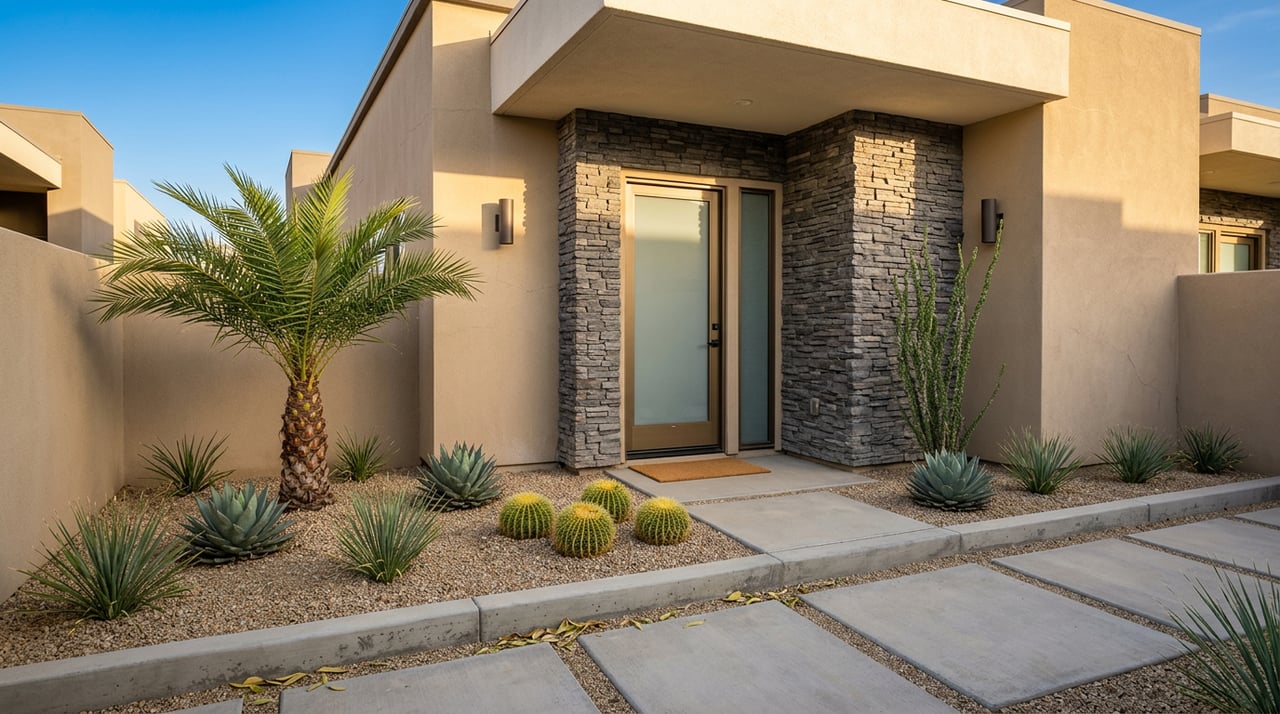
Looking for a sunny retreat you can lock, leave, and love coming back to? If you want warm winter days, mountain views, and easy upkeep, Fountain Hills checks every box. You might be downsizing your to‑do list or planning a seasonal escape. Either way, you want clear guidance on what to buy, what it costs to carry, and how to set it up so you do more relaxing and less repairing. This guide gives you practical, local steps to choose the right low‑maintenance home, forecast annual costs, and navigate rental rules with confidence. Let’s dive in.
Why Fountain Hills fits lock‑and‑leave living
Easy living and everyday recreation
You get a small‑town feel with big scenery. Fountain Hills blends public art, regular festivals, and a signature lake and fountain with quick access to McDowell Mountain trails. That mix draws seasonal owners who want convenience and outdoor time without a long commute. Explore the town’s highlights and culture on the official About Fountain Hills page.
Climate that shapes your plan
Fountain Hills has very hot summers and mild, sunny winters. Climate normals show average daytime highs well over 100°F in July and roughly 10 inches of annual rainfall. Winter is the busy season for snowbirds, while summer is quieter and AC‑heavy. Review the local patterns at the Fountain Hills climate station. These swings influence your maintenance rhythm: plan for HVAC tune‑ups, occasional pool checks, and irrigation adjustments before or after peak heat.
What to buy: condos vs. villas
Condos for hands‑off upkeep
If you want the simplest ownership, a condominium is often the answer. Many associations handle exterior maintenance, community landscaping, pool and spa care, and sometimes bundle services like sewer, trash, or basic cable. Interior space is smaller, so you spend less time managing and more time enjoying. In central Fountain Hills, for example, recent public listings in communities like Plaza Del Lago have shown HOA dues roughly in the $250 to $340 per month range, often including multiple utilities and common‑area services. Always verify the exact inclusions with current HOA documents.
Villas and gated patio homes
Patio homes and low‑maintenance single‑family villas give you more privacy and often come in gated enclaves with front‑yard landscape care, a community pool, or fitness facilities. Around Fountain Hills, you will see golf‑oriented and amenity‑rich neighborhoods referenced in local marketing, including Firerock, SunRidge Canyon, and Eagle Mountain. Dues may be higher than a basic condo but can replace several separate vendor contracts, especially for yard and common‑area upkeep. This can be a smart balance if you want a private yard without full maintenance.
What HOAs usually cover vs. what you still handle
A lock‑and‑leave HOA commonly includes exterior building maintenance, roof programs for condos, irrigation and common landscaping, pool and spa operations, exterior pest control, master insurance for building shells, and gated entry. You still need to budget for interior systems and personal property. Condo owners typically carry an HO‑6 policy, while single‑family owners carry an HO‑3 policy. Statewide homeowner insurance costs can help you ballpark coverage; see current Arizona figures from Reviews.com.
Financial strength matters too. A healthy HOA maintains current financials and a recent reserve study that funds big‑ticket items like roofs, paving, and pool replastering. Thin reserves can lead to special assessments. Before you buy, request the budget, reserve study, latest financials, 12 to 24 months of meeting minutes, and any pending litigation. For why reserves matter and how they are funded, review this industry explainer from FirstService Residential.
Do the math: carrying costs to expect
As of early 2026, public market trackers indicate a mid‑$600,000 pricing environment townwide. For example, Zillow’s average value estimate was near $659,000 and Redfin’s median sale hovered around $684,000 in February 2026. Use these as general context and plan to refresh data at the time you buy.
Core monthly and annual items
- HOA dues: Monthly or quarterly. Coverage and price vary by community.
- Property taxes: Maricopa County’s effective rates are often near 0.4 to 0.5 percent of assessed value. Arizona uses a Limited Property Value method that can cap annual increases, though exact figures vary by parcel. See a local effective‑rate overview at salestaxcalculator.net.
- Insurance: HO‑6 for condos, HO‑3 for single‑family. Use statewide averages from Reviews.com to set a baseline and refine with your insurer.
- Maintenance reserve: A conservative rule for single‑family homes is about 1 percent of property value per year. Condos may require less due to HOA reserves, but owners should still budget. See a general O&M overview at ADPrun.
- Utilities and services not covered by the HOA: In summer, electricity for AC is the big variable. The local climate norms explain why summer usage spikes.
- Caretaking and vendors: If you live out of town, consider periodic house checks, seasonal HVAC service, and pool service if applicable.
Example annual budget for a $680,000 purchase
Numbers below are illustrations using public references as of February 2026. Adjust to your exact property, policy choices, and HOA inclusions.
Scenario A: Low‑maintenance condo
- Property tax using a 0.47 percent effective rate: $680,000 × 0.0047 ≈ $3,196 per year. Source: Fountain Hills property tax reference.
- HOA dues example: $300 per month ≈ $3,600 per year. Many Fountain Hills condos show dues in the $250 to $350 range; always confirm.
- Insurance (HO‑6): Roughly $1,650 to $1,900 per year for Arizona averages, with condo policies often lower depending on coverages. Source: Arizona homeowner insurance guide.
- Owner reserve for interior items: 0.5 percent of price ≈ $3,400 per year. Rationale based on general O&M guidance from ADPrun.
- Estimated total recurring: About $12,000 per year (near $1,000 per month), excluding mortgage and variable utilities.
Scenario B: Low‑maintenance villa in a gated community
- Property tax: ≈ $3,196 per year. Source: Fountain Hills property tax reference.
- HOA dues example: $200 per month ≈ $2,400 per year. Coverage varies by community.
- Insurance (HO‑3): About $1,800 per year using Arizona averages. Source: Arizona homeowner insurance guide.
- Owner reserve: 1 percent of price ≈ $6,800 per year. See general O&M rule of thumb at ADPrun.
- Utilities and pool operations not covered by HOA: Example $1,800 per year.
- Estimated total recurring: About $16,000 per year (near $1,330 per month), excluding mortgage.
These examples highlight why HOA inclusions matter. Some condo associations include cable, sewer, and trash, which shifts costs from your personal budget to HOA dues. Ask for the association’s current budget, master insurance declarations, and reserve study to confirm what is covered.
Thinking about renting part‑time?
Fountain Hills allows rentals with registration and tax compliance. Short‑term rentals of fewer than 30 days require town registration before advertising and trigger a combined lodging tax rate of 14.17 percent at the local, county, and state levels. Owners must file Transaction Privilege Tax returns. Review the process and links on the town’s Short‑Term Rental Compliance page.
HOAs can restrict rentals through CC&Rs or recorded amendments. If renting is central to your plan, request the CC&Rs, rules, amendments, and recent meeting minutes, and consult counsel before you buy. For legal background on HOA rental restrictions and Arizona case trends, see the discussion hub at this law firm’s HOA blog.
Seasonal demand is strongest in winter and spring, with slower summer bookings due to heat. For earnings estimates, talk with a local property manager or use a dedicated short‑term rental analytics provider. Calibrate your expectations by season and event calendar.
New build or resale?
New‑build advantages for low maintenance
New homes typically offer modern systems, energy efficiency, and fewer early repairs. Most builders provide a workmanship warranty for about one year, systems coverage for a longer period, and structural coverage that can extend further through third‑party programs. Always read the exact terms. For a quick primer on typical coverage, review this builder‑warranty overview from AHS.
Resale advantages
With a resale, you can see the maintenance history, compare actual HOA financials, and review documented improvements. You also benefit from established comps for pricing and, in many cases, an already‑mature landscape and community.
Local inventory reality
Fountain Hills is bordered by protected desert and existing master‑planned areas, so large new subdivisions are limited. Many buyers will focus on resales or small infill projects that appear periodically. Ask your agent to compare builder warranty details on any new options versus the HOA disclosures available on resales so you can balance risk and convenience.
Lock‑and‑leave setup checklist
Use this list to streamline your purchase and ownership plan:
- Request from the HOA: current budget, reserve study, master insurance declarations, recent meeting minutes, rules and rental provisions, and any pending assessments or litigation. Learn why reserves matter from FirstService Residential.
- Verify Town requirements if you plan to rent and complete registration before advertising. Start with the Short‑Term Rental Compliance page.
- Inspect key systems: HVAC age and service records, pool equipment, irrigation, roof age, and termite history. Schedule seasonal HVAC service ahead of high heat.
- Set up remote‑friendly tools: smart thermostat, permitted security cameras, and leak sensors. Line up local vendors for house checks and pool care if needed.
- Confirm financing early. Second‑home loans often require stronger qualifications, cash reserves, and higher down payments than a primary residence. Many buyers target 10 to 20 percent down with reserve requirements. Review second‑home basics with this Amerisave guide.
Ready to find the right condo or villa and make your ownership effortless? Tap into local guidance, clear numbers, and a plan that fits how you live. If you want a seasoned partner from search to setup, reach out to Andy Berglund for a personalized game plan.
FAQs
What makes Fountain Hills good for low‑maintenance second homes?
- You get a small‑town, art‑forward setting with mountain access, winter‑friendly weather, and many condo and villa options where HOAs handle exterior work. See the town’s About Fountain Hills page for local context.
How hot do summers get and how does that affect upkeep?
- Average July highs run well over 100°F, so plan for strong AC use, periodic irrigation checks, and seasonal HVAC service. Local climate norms are summarized at the Fountain Hills station.
What are typical condo HOA dues in Fountain Hills?
- Many condo communities show dues in the $250 to $350 per month range, often covering grounds, pool, and some utilities. Inclusions vary, so review each HOA’s budget and rules before you buy.
How are property taxes calculated for a second home in Fountain Hills?
- Maricopa County property taxes are relatively low, with effective rates often near 0.4 to 0.5 percent of assessed value. Arizona uses a Limited Property Value method that can cap annual increases. See a local reference at salestaxcalculator.net.
Can I use my Fountain Hills home as a short‑term rental?
- You may, but you must register with the Town before advertising and collect and remit a combined lodging tax of 14.17 percent for stays under 30 days. Start with the Town’s Short‑Term Rental Compliance page and check your HOA’s CC&Rs.
What insurance do I need for a lock‑and‑leave property?
- Condo owners usually carry an HO‑6 policy and rely on the HOA’s master policy for the building shell. Single‑family owners carry an HO‑3 policy. Use Arizona averages to estimate costs via Reviews.com and then get quotes.
Should I buy new construction or a resale for low maintenance?
- New builds reduce early repair risk and include builder warranties, while resales offer proven HOA records and maintenance history. Compare warranty terms and HOA disclosures in detail. For typical warranty structures, see AHS’s overview.